


Okay, here’s a breakdown of the text, categorized for easier use and analysis. This includes key themes, facts, and potential areas for further exploration.
CONTINUA DEPOIS DA PUBLICIDADE
I. Core Narrative & Theme:
The 3I/ATLAS Comet:
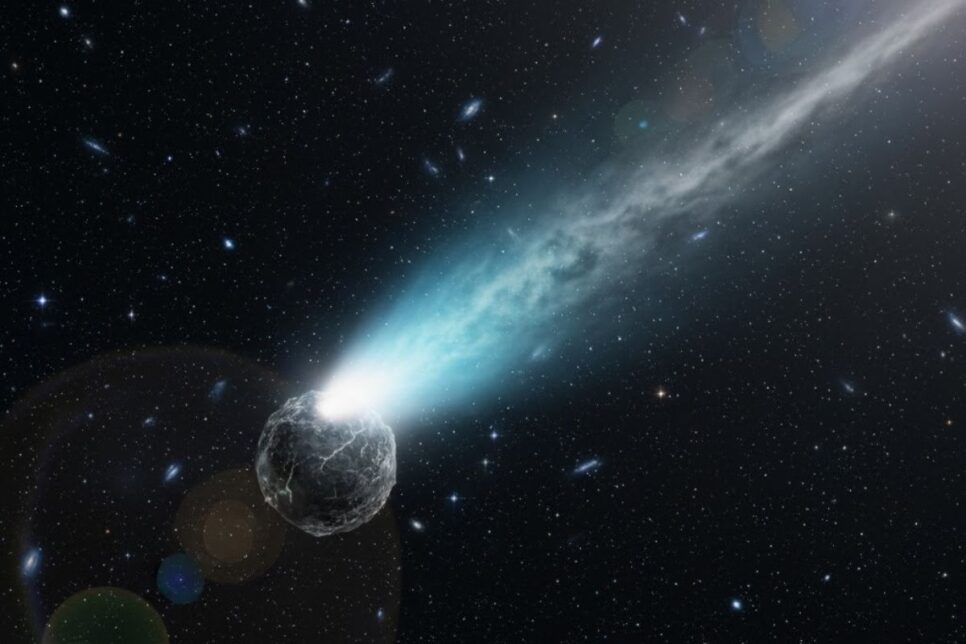
The central story revolves around a recently discovered comet (3I/ATLAS) that is passing through our solar system. It’s a significant event due to its unusual composition and trajectory.
Scientific Curiosity & Discovery:
The text emphasizes the excitement and importance of scientific observation and data collection. It highlights the value of studying objects from outside our solar system.
CONTINUA DEPOIS DA PUBLICIDADE
Origins & Early Solar System:
A key theme is the comet’s potential connection to the early formation of our solar system, suggesting it might be a remnant from that period.
Bridging Science & Speculation:
The text skillfully balances factual scientific information with the inevitable human tendency to speculate (e.g., the possibility of it being an alien probe).
CONTINUA DEPOIS DA PUBLICIDADE
LEIA TAMBÉM!


II. Key Facts & Data:
Discovery:
3I/ATLAS was discovered in 2023.
Speed:
It’s traveling at approximately 245,000 km/h.
Composition:
It has a remarkably high concentration of nickel, significantly higher than typical comets. This is a crucial and unusual finding.
Origin Theories:
Scientists believe it may have originated in the boundary between the thin disk and the thick disk of the Milky Way galaxy – regions formed early in the galaxy’s history.
Age Estimates:
The comet’s composition suggests it could be billions of years old.
Visibility:
Its apparent magnitude will be around 11.5, making it too faint to be seen with the naked eye, but detectable with powerful telescopes.
Observational Targets:
The Perseverance rover on Mars will also be able to gather data as the comet passes.
III. Scientific Perspectives & Theories:
Nickel Significance:
The high nickel content is a major puzzle. Scientists are investigating potential explanations, including:
Exotic Chemical Environments:
The comet may have formed in a region with unusual chemical conditions.
Metallic Building Blocks:
It could be carrying materials that were prevalent in the early solar system.
Avi Loeb’s Hypothesis:
The text briefly mentions the controversial suggestion by astronomer Avi Loeb that the comet could be an artificial probe.
Data-Driven Approach:
The text consistently emphasizes the importance of relying on observational data and rigorous scientific analysis.
IV. Potential Areas for Further Exploration/Analysis:
The Significance of Nickel:
Deep dive into the reasons why nickel is so abundant in this comet. What does it tell us about the conditions in the early solar system?
Loeb’s Hypothesis:
A more detailed examination of Avi Loeb’s arguments and the scientific criticisms of his theory.
Comparative Studies:
How does the composition of 3I/ATLAS compare to other comets and icy bodies?
The Role of Telescopes:
Discuss the capabilities of the Hubble and James Webb telescopes and how they are contributing to the study of this comet.
The Search for Life’s Building Blocks:
Could this comet provide clues about the origins of water and organic molecules – essential ingredients for life?
—
To help me tailor the information further, could you tell me:
What is the purpose of this analysis? (e.g., a report, a presentation, a research project?)
Are there any specific aspects of the text you’d like me to focus on?